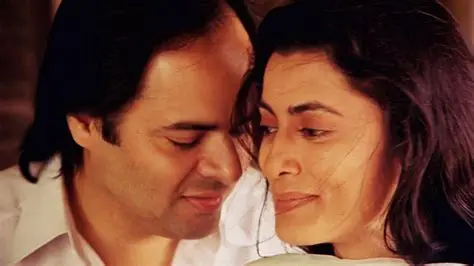
Maya Memsaab (1993), directed by Ketan Mehta, is a film that quietly resists the conventions of mainstream Hindi cinema. Rooted in emotional introspection rather than spectacle, the film explores longing, boredom, and the invisible fractures within a seemingly stable life.
Loosely inspired by classic literary themes, Maya Memsaab remains a compelling example of Indian art cinema that values psychological depth over narrative comfort.
Often remembered for its bold subject matter and early performances by actors who later became icons, the film continues to invite reflection for its mood, restraint, and ambiguity.
Synopsis
Maya is a young woman married to a gentle, disciplined doctor in a small town. While her life is comfortable and socially respectable, it lacks emotional intensity. Her husband’s kindness cannot compensate for the absence of passion and curiosity that Maya yearns for.
Gradually, she seeks fulfillment outside her marriage, entering relationships that promise excitement and escape. Instead of liberation, these encounters deepen her sense of emptiness. Desire becomes a restless force, pushing Maya further away from stability and closer to emotional isolation.
When Maya disappears under mysterious circumstances, the film revisits her life through memories, conversations, and fragmented perspectives. What emerges is not a clear explanation, but a portrait of a woman who remained elusive even to those closest to her.
The Filmmaker and His Vision
Director Ketan Mehta approaches Maya Memsaab as a character study rather than a moral tale. His interest lies in observing emotional contradictions — how comfort can coexist with dissatisfaction, and how freedom can feel suffocating.
Instead of condemning or justifying Maya’s choices, Mehta allows the audience to sit with discomfort. The film reflects his broader cinematic sensibility, one that blends literary influence, human psychology, and social observation without overt commentary.
Style of Filmmaking
Maya Memsaab is marked by a restrained and deliberate filmmaking style:
Fragmented narrative structure that reflects emotional dislocation emphasizing interiors, stillness, and isolation
Symbolic imagery using space, mirrors, and weather to suggest inner states
Unhurried pacing that prioritizes mood over plot Mechanics
The film allows silence and repetition to carry meaning, creating an immersive emotional atmosphere rather than a traditional dramatic arc.
Performances
Deepa Sahi anchors the film with a subtle and introspective performance. Her portrayal of Maya relies less on dialogue and more on expression and presence, making the character quietly unsettling and deeply human.
Farooq Shaikh brings warmth and sincerity to the role of Maya’s husband, embodying emotional stability that paradoxically highlights Maya’s unrest.
Shah Rukh Khan, in an early and unconventional role, adds complexity rather than glamour, reinforcing the film’s departure from mainstream expectations.
Themes and Interpretation
Maya Memsaab explores several enduring themes: emotional dissatisfaction within structured relationships; desire as both escape and burden; the loneliness of unfulfilled longing; and the gap between fantasy and lived reality.
The film resists resolution, suggesting that some emotional questions remain unanswered by design.
Maya Memsaab is a film that demands patience and emotional engagement. Its power lies not in dramatic twists but in its lingering unease. For viewers drawn to introspective cinema and character-driven narratives, it remains a haunting and rewarding experience.