
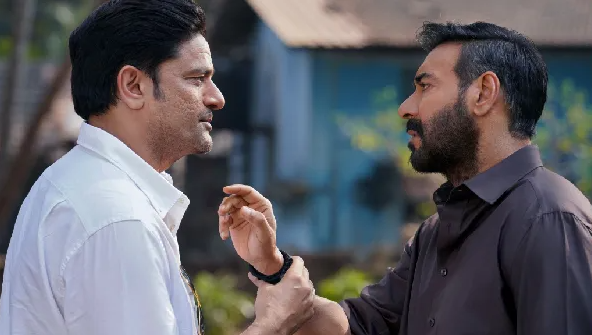
When the original Drishyam landed in 2015, it worked because it relied on simple human desperation. Vijay Salgaonkar wasn’t an action hero with endless resources; he was a cable operator using basic logic and movie trivia to protect his family. Eleven years and three films later, director Abhishek Pathak’s Drishyam 3: The Conclusion arrives with the heavy responsibility of closing the loop. Arriving in theaters on its signature October 2 release window, the finale delivers a cerebral, tense, and emotionally grounded sendoff.
The Setup: The Past Never Stays Buried
The narrative picks up years after the events of the second film. The Salgaonkar household lives under a quiet, watchful calm, but the town of Pondole hasn’t forgotten. When a fresh forensic discovery revives the long-dormant investigation into Sameer Deshmukh’s death, the state police deploy a specialized investigative unit to break Vijay’s alibi once and for all.
Rather than repeating the familiar beats of police interrogations, the screenplay by Pathak and Upendra Sidhaye shifts the focus. The first hour operates like a high-stakes legal chess match, pitting modern digital forensics and surveillance tactics against Vijay’s old-school preparation.
Performances: Understated Grit
Ajay Devgn gives one of his most restrained performances in recent memory. He plays Vijay not as a mastermind enjoying his cleverness, but as a visibly exhausted father carrying a decade of psychological weight. His quiet posture and steady eyes do the heavy lifting throughout the runtime.
The supporting cast provides sharp contrast:
- Jaideep Ahlawat: Joins the cast as the lead investigator. He avoids shouting villain tropes and instead plays a methodical, sharp officer who respects Vijay’s intellect, making their dynamic genuinely tense.
- Tabu (Meera Deshmukh): Returns with less overall screen time, yet her presence anchors the story’s emotional core as a mother still searching for finality.
- Shriya Saran: Brings necessary warmth and panic to the household scenes, keeping the stakes personal.
Craft and Direction
Technically, the film chooses restraint over excess. Cinematographer Sudhir K. Chaudhary uses tight, claustrophobic framing inside the Salgaonkar house, contrasting it with wide, cold shots of the police headquarters. The visual palette stays grounded, avoiding hyper-stylized filters.
Devi Sri Prasad’s background score relies on low, rhythmic percussion to build tension rather than loud jump scares. Editor A. Sreekar Prasad keeps the 150-minute runtime tight, though the middle act lingers a bit too long on secondary character subplots before tightening up for the climax.
The Verdict
Drishyam 3: The Conclusion succeeds because it respects the audience’s intelligence. It avoids cheap theatrical shortcuts, choosing instead to resolve its core conflict through patience, consequences, and sharp writing. It stands as a fitting end to one of Hindi cinema’s most consistent thriller series.
Verdict: 3.5 / 5 Stars
Watch the Official Trailer